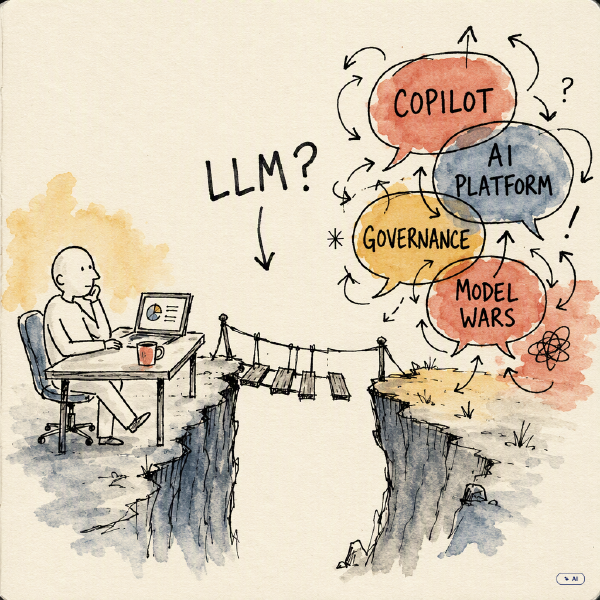
I just went through the slides of an old Gartner keynote about the digital workplace. “Old” is a big word here, since it is from 2024, but in technology terms that is already close to retirement age.
I did not attend the talk, and the slides are graphically simple. So this is my interpretation of the slides, not a summary of what was said on stage.
One slide stood out. It lists what leaders should take away: see the danger of only dealing with the problems in front of you, and support the ambitions for AI and distributed work. Other slides talk about everyday AI, productivity gains and new ways of working.
Upload your CV. Now type your name, address, employment history, education and qualifications into the text boxes below.
The company already has that information, but its recruitment system can’t reliably map your document onto the structure its process requires. So the applicant becomes the integration layer. You read your own CV, reconcile terminology, reformat dates and fit your experience into categories the vendor chose. The form was digitised, not removed.
Most enterprise AI adoption stalls at the same point.
I get this question in almost every Modern Workplace engagement, usually about twenty minutes after we agree that standing local admin rights have to go: “Don’t we already have something for that in our Microsoft licence?” For years the honest answer was “almost — it’s an add-on.” From July 2026, the answer changes, and it’s worth a blog post, because the gap between Microsoft’s Endpoint Privilege Management (EPM) and the established specialist tools is smaller than those vendors will tell you — and larger than Microsoft’s pre-sales decks suggest.